Best Countries to Live in 2027: 8 Stable Favorites Worth Planning For

It is July 2026, and the search bar already knows what people want next: best countries to live in 2027.
That is not a gimmick. A serious move usually takes six to eighteen months. If you start researching now, your first full year abroad lands in 2027. The wrong shortlist wastes that runway on buzz markets that flip style every summer. The right shortlist favors places where the boring stuff keeps working: hospitals, trains, courts, broadband, and street-level safety.
We already published a 2026 livability roundup. This piece looks one year ahead with a tighter filter: continued stability, plus countries that still feel like real favorites for people choosing a base, not a weekend city break.
If you want the full scoreboard, open our quality of life ranking and the safest countries table. Then stress-test rent with the cost of living calculator before you fall in love with a skyline photo.
What “stable and favorite” means here
Stability is not a slogan. For relocation it means you can make plans that still hold after the honeymoon month.
We looked for countries that tend to keep delivering on all four:
- Everyday safety that does not depend on a locked compound
- Public systems (care, transport, docs) that newcomers can enter with paperwork, not luck
- Predictable rules for work, tax, and residency, even when policy tweaks happen
- Ongoing demand from skilled workers, remote earners, and families (the “favorite” part)
Flashy nightlife and temporary visa hacks did not get bonus points. Places that score high today but feel volatile next winter dropped off this list.
No ranking replaces a visa consult or a scouting trip. Treat this as a shortlist engine. After you pick two finalists, use Compare and the Should You Move quiz.
The 2027 shortlist at a glance
| Rank | Country | Why it still looks strong for 2027 |
|---|---|---|
| 1 | Switzerland | Top-tier safety and care with rules that rarely surprise residents |
| 2 | Norway | Resource-backed services and outdoor-first daily life |
| 3 | Denmark | High trust, bike cities, and welfare that still shows up |
| 4 | Singapore | Dense, clean systems where policy continuity is the product |
| 5 | Netherlands | English-friendly career hubs inside the EU |
| 6 | Japan | Social order and infrastructure that keep cities livable |
| 7 | Australia | English-speaking courts and climate variety in one visa map |
| 8 | Canada | Transparent skilled pathways and space outside the hottest metros |

1. Switzerland
If 2027 rewards people who hate chaos, Switzerland stays first.
Trains run. Clinics book. Violent crime stays low in a way you feel on evening walks, not only in a PDF. Finance, pharma, and engineering salaries still clear most European peers after currency math, which is why the country stays popular with dual-income professionals even when the rent chart looks rude.
Best for: households that already secured housing and six months of reserves after deposits.
Main watch-out: cost is the filter. Zurich and Geneva rent, mandatory health insurance per person, and quota pressure on non-EU hiring do not soften just because the calendar flips to 2027. Canton tax rules still change when you cross a bridge.
Stability here is expensive. It is also unusually durable.

2. Norway
Norway keeps looking like a 2027 favorite for a simple reason: the society keeps funding the boring backbone. Tunnels reach towns. Parental leave is real. Fiber shows up in places that still smell like forest weekends.
Energy, maritime, and tech clusters keep drawing specialists. Families who want nature without giving up city services keep recommending it in expat chats for the same reason.
Best for: parents and outdoor-first professionals who can handle dark winters with deliberate habits.
Main watch-out: daylight and housing. Oslo winter light is short. Rental paperwork stays strict. Dining out burns cash fast if you treat restaurants like a social default.
If you need a side-by-side with another Alpine or Nordic option, stack Norway in Compare before you book anything irreversible.

3. Denmark
Denmark earns a 2027 slot because trust compounds. Lost wallets often return. Bike bridges get funded. Acute care and childcare (once CPR numbers clear) still feel like systems, not favors.
That package keeps Copenhagen and Aarhus on shortlists for parents and life-science specialists even when winters match southern Sweden for darkness.
Best for: families who want predictable public services after registration, and professionals near Medicon Valley or wind-energy clusters.
Main watch-out: tax wedge plus housing. Top rates surprise US newcomers used to thinking in gross pay. New waterfront stock in Copenhagen prices like a gateway city, not a “hygge discount.”
4. Singapore
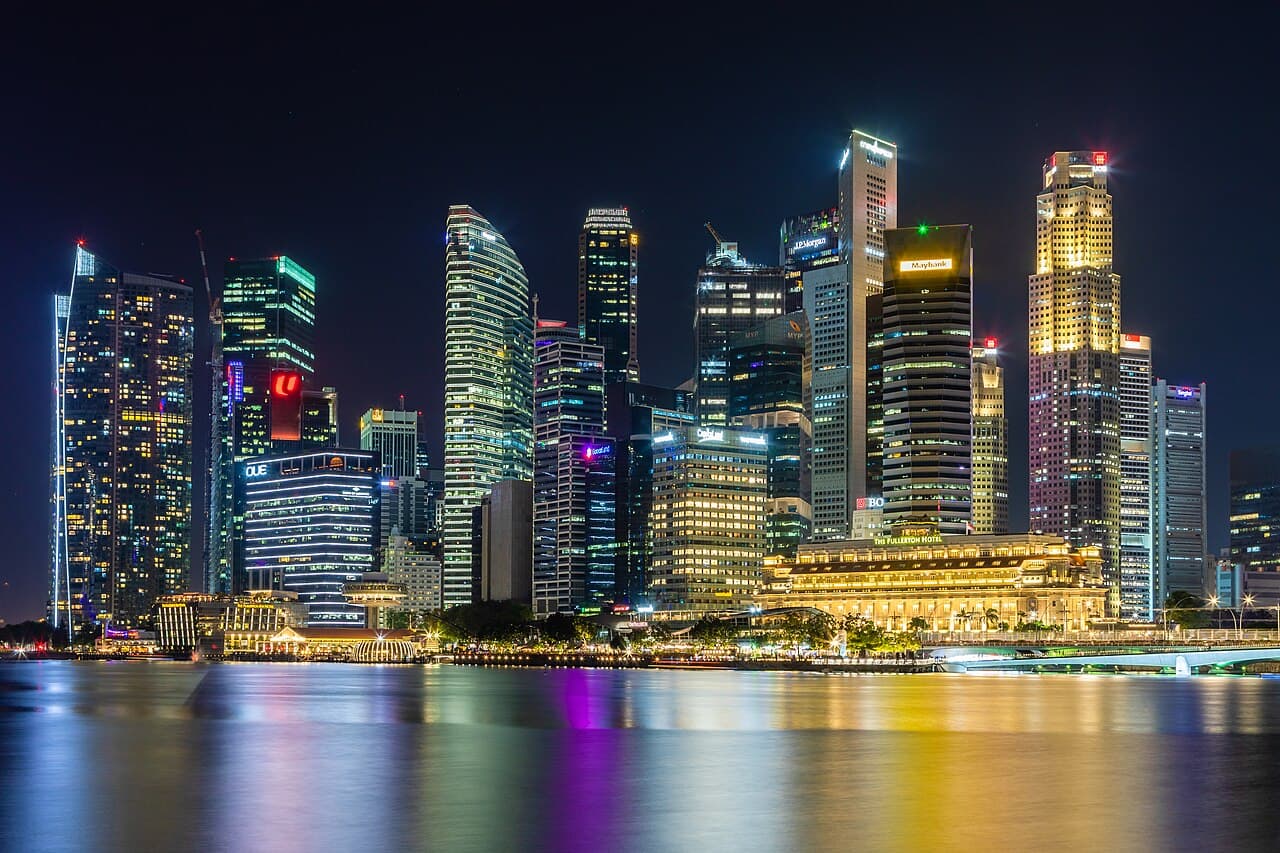
Singapore is not cheap. It is coherent. That is why it stays a planning favorite into 2027 for people who want dense services, low street crime, and policy that rarely lurches for entertainment value.
Fintech, biotech, and regional HQ roles keep the talent pipeline full. Public systems feel engineered. Safety scores stay elite in our model for a reason you notice on late MRT rides.
Best for: high earners and regional managers who trade space for speed, cleanliness, and rule clarity.
Main watch-out: cost of everything and a tighter cultural code than weekend tourism blogs suggest. Personal freedom scores sit below Nordic peers in our data. If that trade-off bothers you, Singapore is the wrong kind of “stable.”

5. Netherlands
The Netherlands stays crowded with movers for a reason that will not vanish in 2027: career depth plus English in offices, universities, and many service desks. Bike cities make daily life feel human once you learn the unwritten rules.
Amsterdam, Rotterdam, Eindhoven, and Utrecht keep attracting EU Blue Card holders and scale-up hires. That demand is the point. Favorites stay hard to enter.
Best for: EU-path professionals and families who want cycling independence for teenagers.
Main watch-out: housing is structural, not a short squeeze. Waiting lists and income multipliers will still weed out casual movers. Worldwide-taxation rules also punish US citizens who treat Dutch residency as a vibe experiment. Read our longer Netherlands guide if this is already your finalist.

6. Japan
Japan often gets left off “best countries” lists that chase English ease. That is a mistake for 2027 if your priority is order you can feel. Safety and infrastructure remain standouts. Cities stay usable without a car fortress. Cleanliness is not marketing copy.
Tokyo, Osaka, Fukuoka, and secondary hubs keep drawing remote workers and specialists who accept language work as the price of admission. Social cohesion is the stability story: norms hold even when headlines talk about softer hiring in some sectors.
Best for: people willing to learn Japanese for depth, and remote earners who value quiet public systems.
Main watch-out: language gates daily admin, and the labor market is not always generous to outsiders. Our recent job-market note matters if you need local salary growth, not a foreign remote paycheck. Freedom scores sit below Western Europe in our model. Know that before you romanticize neon nights.

7. Australia
Australia keeps returning on “where should we raise kids / build a career” shortlists because the basics stay legible: English courts, familiar consumer protections, and a climate map that stretches from tropical north to temperate south inside one visa system.
Healthcare professionals and outdoor-first households keep pushing demand. That popularity will not cool just because fees or points thresholds move. Policy tweaks are normal. The institutional frame stays readable.
Best for: skilled workers on priority lists and households that accept long-haul flights as the family tax.
Main watch-out: distance and metro rents. Sydney and Melbourne behave like other global gateways. Migration points and state nomination rules still change often enough that you should verify official pages monthly, not a two-year-old blog. Recent visa fee pressure is part of the cost story, not a reason to pretend Australia lost its core appeal.

8. Canada
Canada stays on the 2027 board because the promise is still institutional, not aesthetic. Federal skilled systems are documented. English and French pathways exist. Outside the three hottest metros you can still trade salary for space in a way Western Europe rarely allows.
That combination keeps Canada popular with long-horizon movers even when housing and draw categories frustrate applicants.
Best for: skilled workers who will monitor Express Entry and provincial rules like a part-time job, and people who already have credentials that Canada recognizes.
Main watch-out: housing lag in Toronto and Vancouver, winter kit costs, and policy pauses that punish stale checklists. Build the budget cold, then add childcare and insurance before you call it a win.
How to use this list without lying to yourself
Stability does not equal “easy visa” or “cheap rent.” Several countries above charge a premium for that calm. A few still feel bureaucratic on week three. That is fine if you planned for it.
A clean 2027 workflow:
- Pick two countries from this list (or one from here and one rival outside it).
- Open Compare and dump real scores, not memory.
- Run the cost of living calculator with your housing tier and household size.
- Check residence labels on each country page and verify rules on official sites.
- Only then book scouting dates or school deposits.
If you want the prior-year frame for context, keep the 2026 top 10 open beside this page. Favorites rotate slowly. Your visa paperwork does not.
Closing angle
The best country to live in for 2027 is the one whose systems still work after your honeymoon photos stop getting likes. Switzerland, Norway, Denmark, Singapore, the Netherlands, Japan, Australia, and Canada earn that bar for different household types. They stay favorites because continuity is scarce, not because they trend on short video.
Narrow the field. Model the cash. Confirm the visa. Then choose boring excellence on purpose.
Comments on Best Countries to Live in 2027: 8 Stable Favorites Worth Planning For
Loading comments…
Share your experience

About the author
Noah Walker
Editorial writer for Country To Live, covering relocation research, visas, taxes, and quality-of-life comparisons.